

Blog

Wet vs. Dry Suspension Analysis of Tungsten Metal Powders Using the Raptor Dynamic Image Analyzer

The ASTM D7596-14 (ASTM, 2018) was designed as a guide for the determination of particle concentration, particle size distribution, particle shape, and soot content for new and in service oils used for lubrication and hydraulic systems using a direct imaging integrated tester.

2025-05-22T14:07:59+00:00May 22nd, 2025|Blog, News|0 Comments

Unlocking Particle Insights: A Real-World Test of Dry Powder Analysis with LCM Materials

The ASTM D7596-14 (ASTM, 2018) was designed as a guide for the determination of particle concentration, particle size distribution, particle shape, and soot content for new and in service oils used for lubrication and hydraulic systems using a direct imaging integrated tester.

2025-05-22T14:10:18+00:00May 22nd, 2025|Blog, News|0 Comments

Beyond Size: See Why Starch Particles Have More to Say Than You Think

The ASTM D7596-14 (ASTM, 2018) was designed as a guide for the determination of particle concentration, particle size distribution, particle shape, and soot content for new and in service oils used for lubrication and hydraulic systems using a direct imaging integrated tester.
2025-05-11T13:20:45+00:00May 10th, 2025|Blog, News|0 Comments

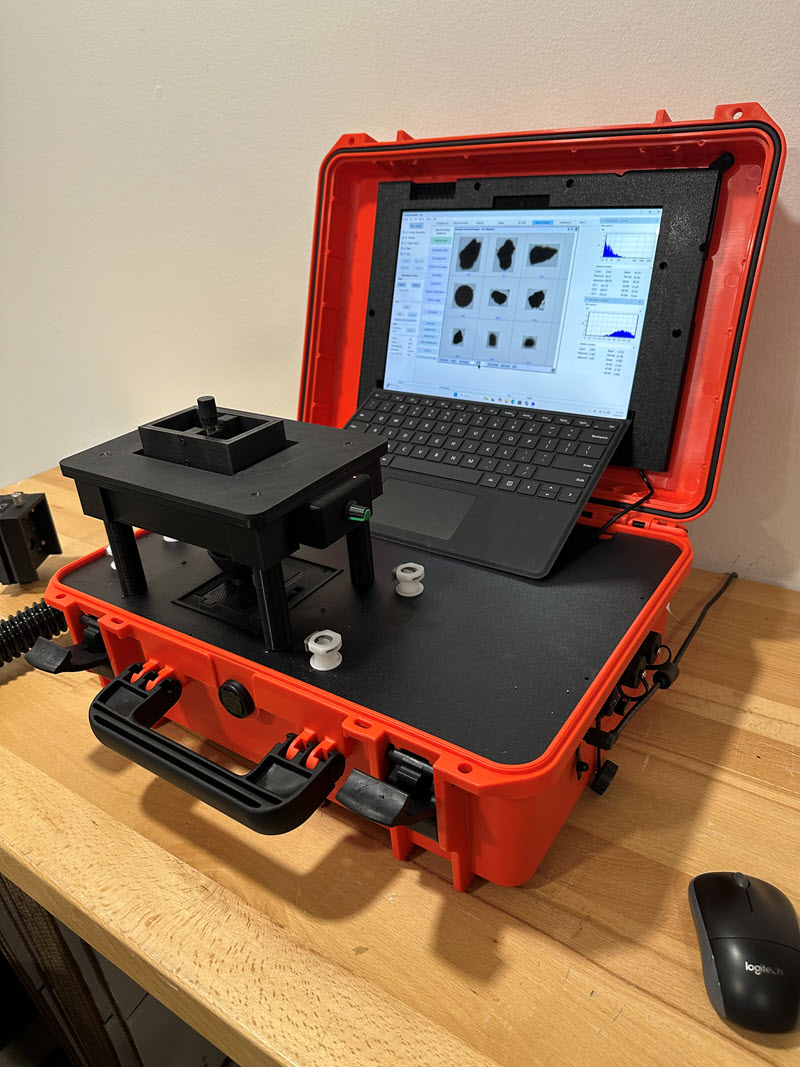
Dry Portable Particle Size & Shape Analyzer: The Future of On-the-Go Particle Analysis

The ASTM D7596-14 (ASTM, 2018) was designed as a guide for the determination of particle concentration, particle size distribution, particle shape, and soot content for new and in service oils used for lubrication and hydraulic systems using a direct imaging integrated tester.
2025-04-30T14:58:19+00:00April 28th, 2025|Blog, News|0 Comments

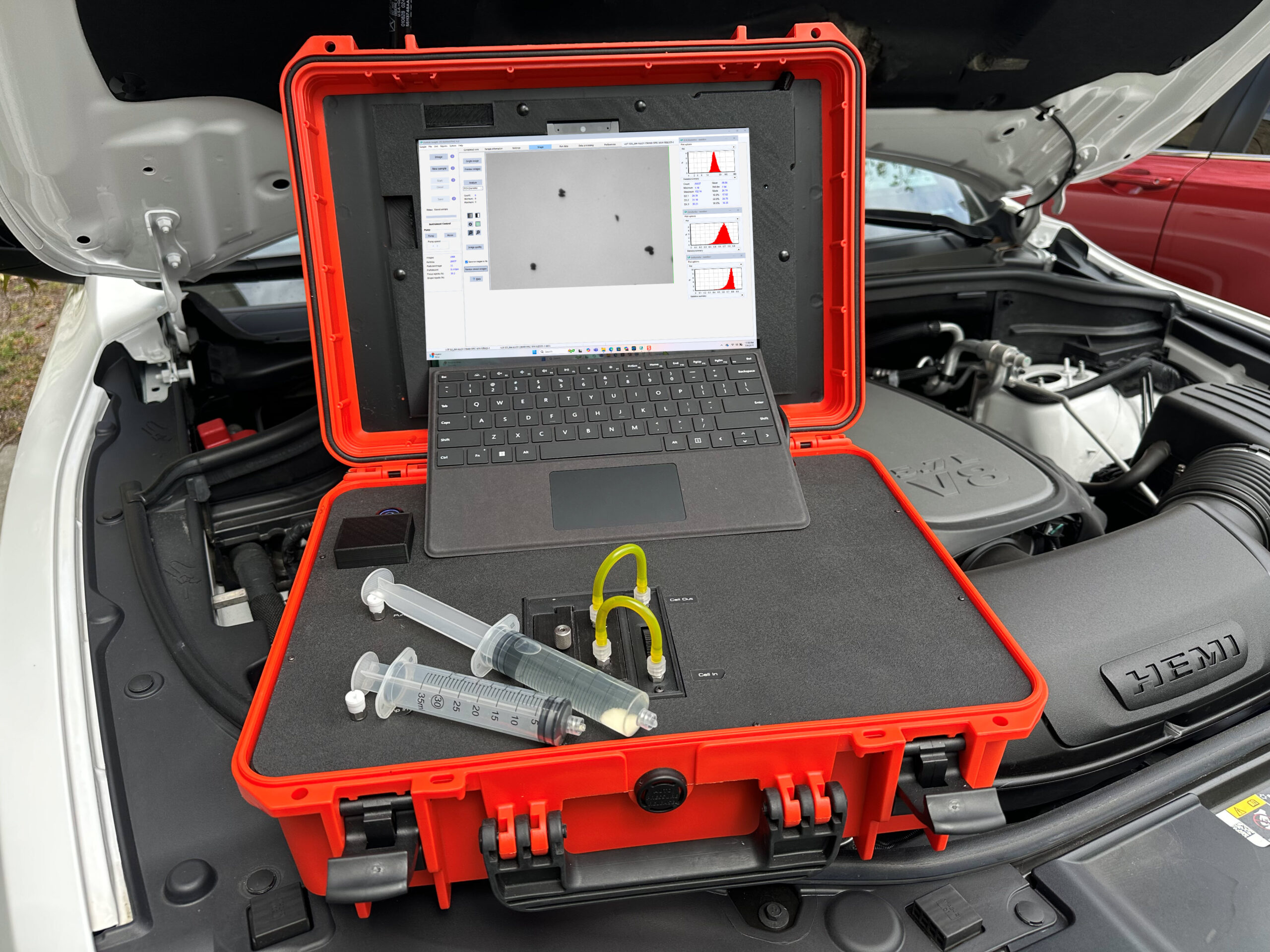
Portable Particle Size Analyzer: The Future of On-the-Go Particle Analysis

The ASTM D7596-14 (ASTM, 2018) was designed as a guide for the determination of particle concentration, particle size distribution, particle shape, and soot content for new and in service oils used for lubrication and hydraulic systems using a direct imaging integrated tester.

2025-03-04T18:24:02+00:00March 4th, 2025|Blog, News|0 Comments

Dynamic Imaging: The Next Industry Standard for Contamination Monitoring

The ASTM D7596-14 (ASTM, 2018) was designed as a guide for the determination of particle concentration, particle size distribution, particle shape, and soot content for new and in service oils used for lubrication and hydraulic systems using a direct imaging integrated tester.

2025-02-12T22:16:25+00:00February 12th, 2025|Blog, News|0 Comments

Hydraulic Oil Testing: Best Practices & ISO Standards for Contamination Control

The ASTM D7596-14 (ASTM, 2018) was designed as a guide for the determination of particle concentration, particle size distribution, particle shape, and soot content for new and in service oils used for lubrication and hydraulic systems using a direct imaging integrated tester.
2025-02-12T19:49:49+00:00February 12th, 2025|Blog, News|0 Comments

Revolutionizing Fluid Contamination Monitoring with Dynamic Image Analysis and ISO 21018-1

The ASTM D7596-14 (ASTM, 2018) was designed as a guide for the determination of particle concentration, particle size distribution, particle shape, and soot content for new and in service oils used for lubrication and hydraulic systems using a direct imaging integrated tester.
2025-08-17T03:57:30+00:00January 29th, 2025|Blog, News|0 Comments

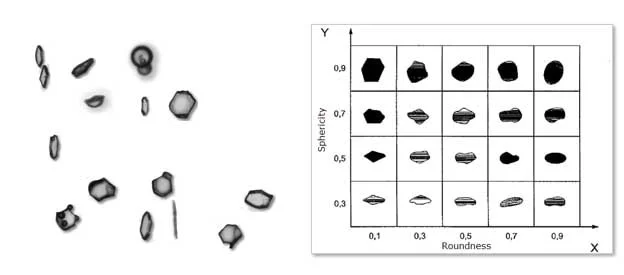
Automating the Krumbein and Sloss chart using Flow Image Microscopy

Particle Measurement Technologies.  How are they different? What is the Krumbien / Sloss Chart? An established geologist, William Christian Krumbein (1902–1979) was known to chase innovative methods in Geology, making great use of mathematics. The Krumbein Medal of the International Association for Mathematical Geology (IAMG) award was named after him. This award was [...]

2025-08-25T15:08:44+00:00September 4th, 2024|Comments Off on Automating the Krumbein and Sloss chart using Flow Image Microscopy

How Particle Shape Analysis Compliments Size Measurements

Particle size reduction is a routine method of increasing surface area and making downstream processing more efficient. It is well documented that particle size distribution (PSD) affects powder flowability. However, studies have demonstrated the limitations of particle size analysis – particularly in applications with irregular particles. Ignoring particle shape can lead to significant under-estimation of the mean particle size which leads to errors in PSD results.

2026-02-01T04:55:46+00:00November 3rd, 2022|Blog, News|0 Comments
Go to Top