
Data Integrity Guidelines for Particle Size Analyzers
Particle size analyzers used in pharmaceutical manufacturing don’t just generate measurements — they generate records the FDA expects to be complete, accurate, and tamper-proof. This guide covers what data integrity means under FDA guidance, why it matters for particle size and shape analysis, and how the Particle Insight Raptor is built to comply.
What Is Data Integrity?
CGMP stands for Current Good Manufacturing Practice — the regulations enforced by the U.S. Food and Drug Administration (FDA) that require pharmaceutical manufacturers to properly design, monitor, and control their manufacturing processes and facilities. Compliance with CGMP protects the strength, quality, purity, and identity of drug products by requiring that manufacturers stay in control of their operations.
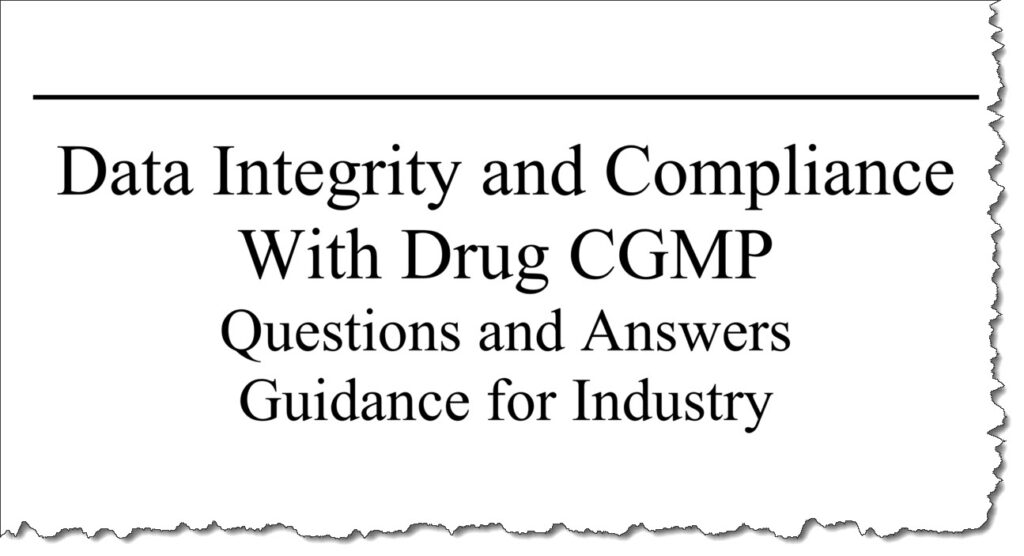
To confirm CGMP guidelines are being followed, the FDA audits pharmaceutical manufacturers and medical device manufacturers who fall under the same regulations. Over years of inspections, the FDA found a rise in CGMP violations tied to lapses in data integrity. In response, the FDA published “Data Integrity and Compliance with CGMP — Guidance for Industry,” clarifying data integrity requirements under 21 CFR parts 210, 211, and 212, which govern manufacturing. The guidance isn’t a complete list of everything that must be addressed — it highlights key areas that have repeatedly caused compliance issues. Implementing it is the manufacturer’s responsibility.
The FDA defines data integrity as the completeness, consistency, and accuracy of data. Reliable pharmaceutical data must be:
- Attributable – linked to the person who generated it
- Legible – recorded clearly and permanently
- Contemporaneously recorded – documented at the time of the activity
- Original, or a true copy – authentic, not reconstructed
- Accurate – correct, reliable, and free from manipulation
These five principles are known by the acronym ALCOA, which the FDA uses across multiple guidance documents. Throughout its Data Integrity guidance, the FDA addresses how data is controlled, how audit trails are managed, and how records are maintained.
Why Data Integrity Matters in Particle Size Analysis
Particle size specifications are used in pharmaceutical development as a parameter that directly affects the final product. In most cases, the dissolution characteristics and bioavailability of solid or suspension pharmaceuticals are directly tied to particle size. Dissolution rates are proportional to surface area, so smaller particles with higher surface areas dissolve more quickly.
Particle size distribution uniformity matters just as much as size itself. Narrower distributions produce a more controlled, uniform dissolution rate; some compounds are intentionally developed with wider distributions to achieve a slower release of the therapeutic compound.
Because particle count, size, and shape play such a central role in controlling drug quality, safety, and efficacy, particle analysis has become a standard part of the manufacturing and development toolkit — and the equipment itself falls under each manufacturer’s quality program and FDA scrutiny. Non-compliant data handling puts both regulatory approval and patient safety at risk, which is why practices like audit trails, electronic records, and secure data storage are essential for any particle characterization equipment used in a regulated environment.
What This Means for Users of Particle Sizing Equipment
The Data Integrity guidance document follows a format similar to the August 2003 guidance on Part 11 for Electronic Records, so enforcement is likely to follow a similar path. If you’re reading this, you’re probably already familiar with particle size analysis instrumentation and/or work in the pharmaceutical sector — which means you know how seriously the FDA treats 21 CFR Part 11 auditing and enforcement.
It’s likely the FDA will fold a more thorough Data Integrity investigation into their CGMP audits going forward, making it essential for manufacturers to ensure all computerized systems are reviewed for compliance.
Below is an excerpt from a recent FDA warning letter sent to a pharmaceutical company following a facility audit. Data integrity deficiencies were among the most prominent findings in the full letter.
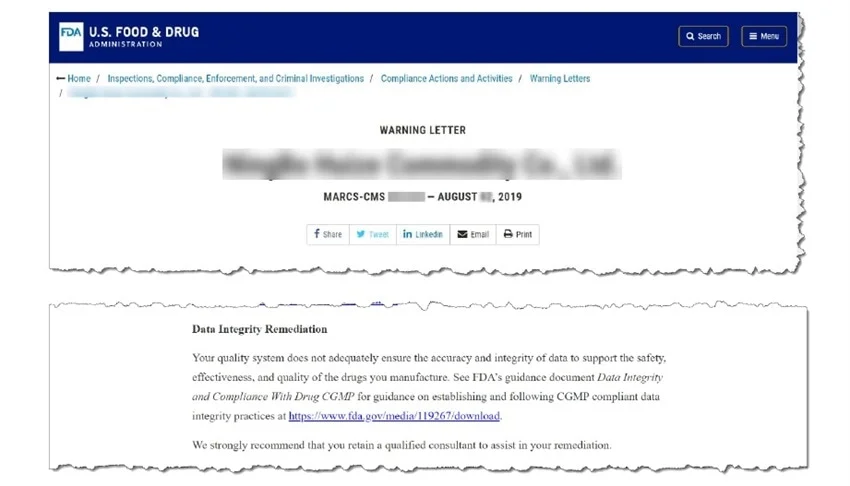
As this warning letter shows, the FDA is actively auditing against the Data Integrity guidance document. The FDA also references “ICH Q7 Good Manufacturing Practice of APIs” as a tool for validating computerized systems — proper installation and operational qualification should be used to demonstrate that equipment can perform its assigned task.
What This Means for Manufacturers of Particle Sizing Equipment
Particle sizing equipment manufacturers have long treated 21 CFR Part 11 as a requirement, not just a “guidance.” As a guidance document, it required manufacturers to interpret its points and implement modifications as they saw fit — what mattered wasn’t the specific implementation method, but how internal quality auditors and the FDA interpreted it. Instrument manufacturers that worked closely with pharmaceutical companies and stayed aligned with FDA expectations were the ones that best met the guidance points.
The Data Integrity guidance is expected to follow the same pattern. It’s only a matter of time before pharmaceutical customers add Data Integrity checklist items alongside their existing 21 CFR Part 11 purchasing checklists — which puts the responsibility on instrument manufacturers to interpret every point, document how it’s implemented, and maintain installation/operational qualification programs that record compliance with FDA validation requirements.
How the Particle Insight Raptor Complies
Vision Analytical’s systems are built to align with FDA data integrity expectations, 21 CFR Part 11 electronic records compliance, and CGMP guidelines. At a glance, the Particle Insight Raptor provides:
- Comprehensive audit trails covering all test activity
- Secure, traceable electronic records
- True copies of original data, protected from alteration
- User accountability and access control
- 21 CFR Part 11–compliant electronic records and signatures
The sections below walk through exactly how these features map to specific FDA regulations.
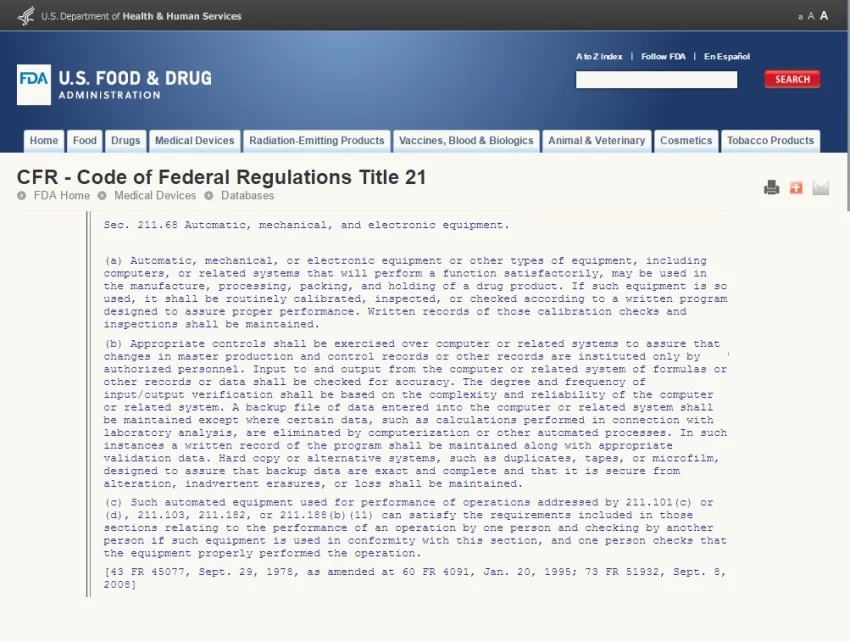
Section 211.68 — Equipment Calibration & Backup Records
If such equipment is so used, it shall be routinely calibrated, inspected, or checked according to a written program designed to assure proper performance. Written records of those calibration checks and inspections shall be maintained.
A backup file of data entered into the computer or related system shall be maintained except where certain data, such as calculations performed in connection with laboratory analysis, are eliminated by computerization or other automated processes.
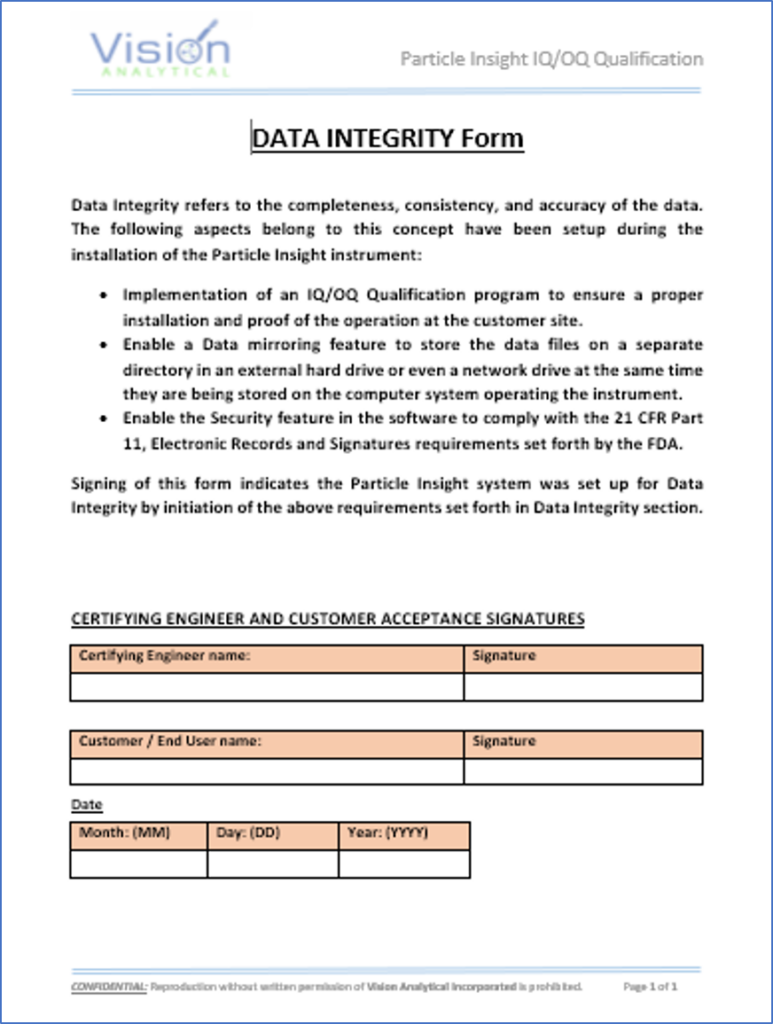
How the Particle Insight Raptor complies: The Particle Insight Raptor has a rigorous IQ/OQ Qualification Program, performed by Field Service Engineers (FSEs) who are specially trained and factory-certified. A Qualification Kit provides the documents, forms, supplies, and NIST-traceable standards needed to complete the qualification — including a dedicated Data Integrity form confirming the system was configured to meet the Data Integrity requirements of the IQ/OQ Qualification Program. Maintenance and instrument performance are routinely monitored under Standard Operating Procedures (SOPs).
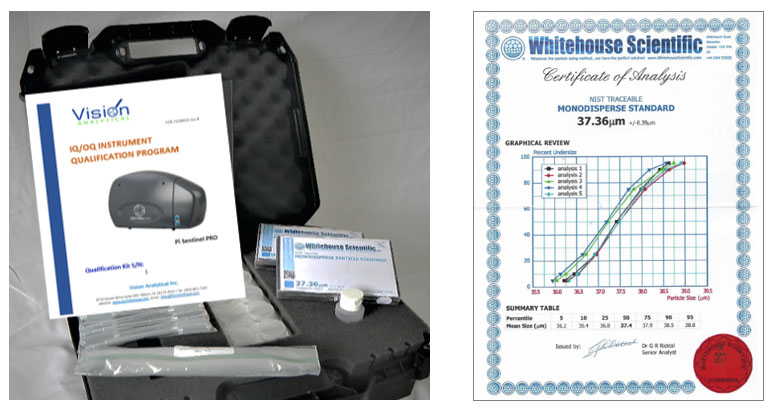
The Qualification verifies system function, precision, and performance using devices and standards calibrated and traceable to NIST. Performance measurements are recorded for future reference, audits, and tracking.
Three main items are involved in the Qualification:
- Service Engineer Manual
- Qualification Kit
- Customer Manual
Supporting documents include:
- Qualifying Engineer Certificate of Qualification
- Certificate of Analysis / Assay Sheet for the Whitehouse Scientific NIST-traceable standard
- Local Field Service Report
The Service Engineer Manual gives the FSE specific instructions for completing the tests required during initial instrument qualification and the annual qualification:
- Pre-Testing – checks instrument performance against a specific standard before preventive maintenance, recorded on the OQ Pre-Test form
- Preventive Maintenance – verification and cleaning of optics, fluidics, and hardware, plus calibration, with a completed checklist
- Post-Testing – re-checks performance after preventive maintenance, recorded on the OQ Post-Test form
The Qualification Kit includes forms completed throughout this process:
- IQ Info Data form – all required information at installation time
- OQ Test and OQ Pre-Test forms – initial and preliminary results
- Maintenance/Checklist form – preventive maintenance and checklist results
- OQ Post-Test form – final results during annual certification
- Qualification Report – average readings from Pre-Test, OQ Test, and Post-Test forms, plus pass/fail results
- Completion Notification and Acceptance Notification – confirm the qualification was completed and accepted
- Out of Specification form – completed if any OQ Test or Pre-Test fails
- Corrective Actions form – documents the failed test and the corrective action taken
- Log form – tracks initial and annual qualifications
Data Mirroring — Section 211.110(b): Data Storage & Availability
This section requires that data be stored in a way that prevents loss or deterioration and remains readily available for review.
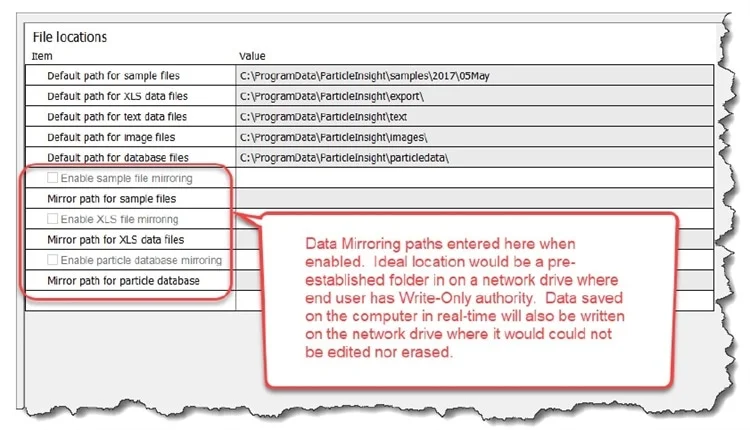
How the Particle Insight Raptor complies: Data Mirroring is a Particle Insight Raptor software feature that stores data files on a separate directory, hard drive, or network drive at the same time the data is saved on the computer operating the instrument.
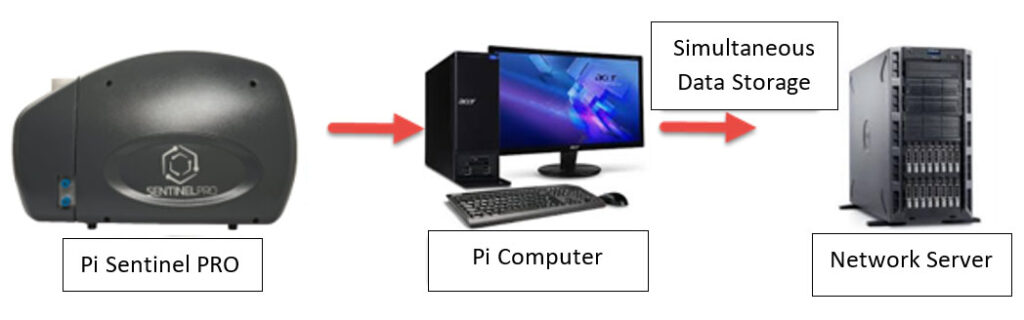
Ideally, the mirrored file path points to an established network drive with write-only privileges. This generates real-time backup files that end users cannot change or delete — the data is written by the instrument software and can’t be altered afterward, satisfying 211.110 of the Code of Federal Regulations.
Sections 211.100 and 211.160 — Documentation & Calibration
§§ 211.100 and 211.160 require that specific activities be documented at the time of performance and that laboratory controls be scientifically sound.
(211.160(4)) The calibration of instruments, apparatus, gauges, and recording devices at suitable intervals in accordance with an established written program containing specific directions, schedules, limits for accuracy and precision, and provisions for remedial action in the event accuracy and/or precision limits are not met. Instruments, apparatus, gauges, and recording devices not meeting established specifications shall not be used.
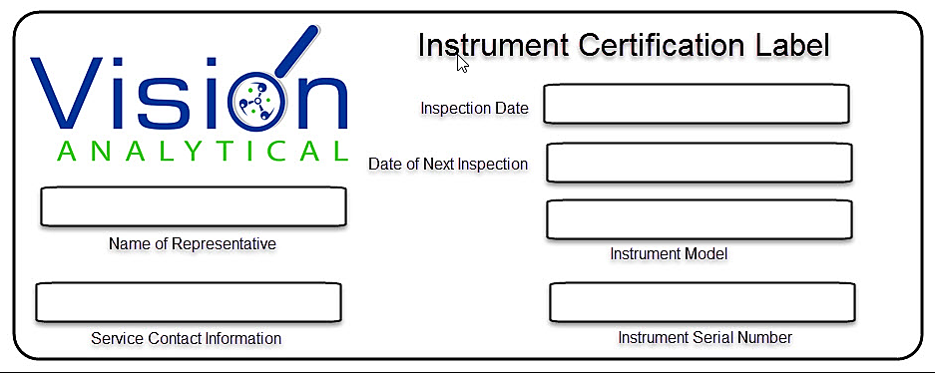
How the Particle Insight Raptor complies: Laboratory control activities generally fall under each lab’s own procedures and quality systems, but the Particle Insight Instrument Qualification Program directly supports 211.160(4) with NIST-traceable standards and non-traceable controls that let end users set up a routine calibration-verification schedule. When Instrument Qualification is complete, the Particle Insight Raptor receives a calibration sticker — objective evidence of installation and calibration by an authorized engineer, stating the date of the next required calibration.
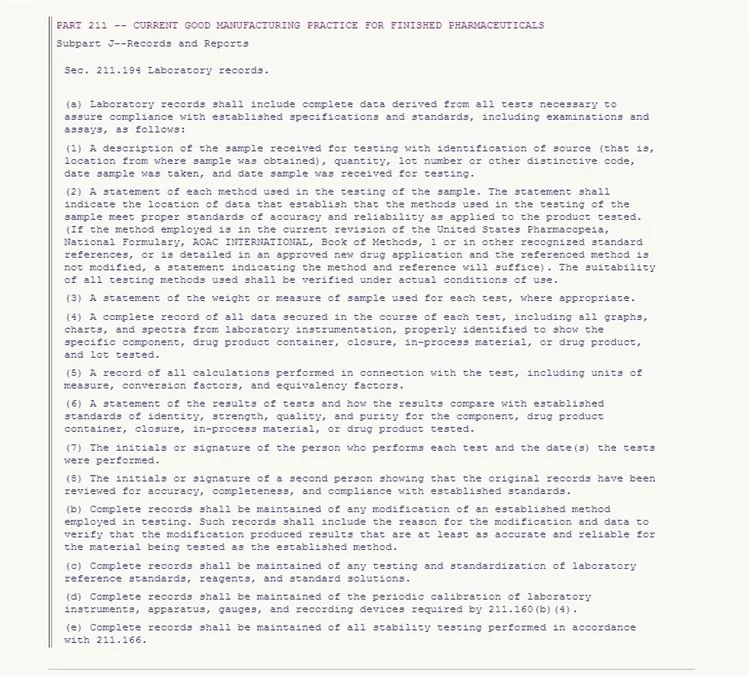
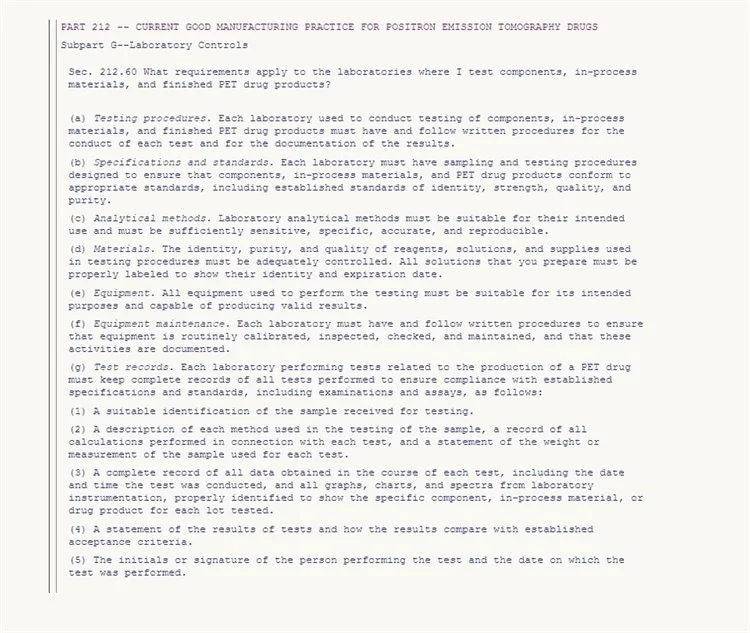
§§ 211.188, 211.194, and 212.60(g) — Complete Test Records
These sections require complete information, complete data drawn from all tests, a complete record of all data, and total records of all tests performed.
How the Particle Insight Raptor complies: The 21 CFR Part 11 compliance built into the Particle Insight Raptor includes audit trails that capture all activity for every test performed. Raw data files are locked from editing once a sample is completed and saved, and checksum verification prevents any attempt to alter data files outside the Particle Insight software. Data Mirroring reinforces this by ensuring files are stored where they remain accessible but cannot be modified or deleted — completing the data integrity assurance required across these sections.
Frequently Asked Questions
What is data integrity in pharmaceutical manufacturing? Data integrity is the completeness, consistency, and accuracy of data generated during manufacturing and testing. The FDA requires that data be attributable, legible, contemporaneously recorded, original (or a true copy), and accurate — the ALCOA principles.
What does ALCOA stand for? Attributable, Legible, Contemporaneous, Original (or a true copy), and Accurate — the five principles the FDA uses to define reliable data across its CGMP guidance documents.
Is the Particle Insight Raptor 21 CFR Part 11 compliant? Yes. The Particle Insight Raptor’s software supports 21 CFR Part 11 electronic records and signature requirements, including audit trails, checksum-verified raw data, and Data Mirroring to a write-only network path.
What is Data Mirroring? A Particle Insight Raptor software feature that simultaneously writes data files to a second location — typically a write-only network drive — so a real-time backup exists that cannot be altered or deleted by the end user.