Find Experts in Here
USP Subvisible Particle Identification Using Dynamic Image Analysis
Why Subvisible Particle Identification is Difficult.
- Light Obscuration systems can quantify but not differentiate particle types
- As with LO systems, representative sampling is required to ensure detection
- Also, as with LO systems, proper suspension and flow rates are needed to avoid settling or floating particles
- AI-assisted tools are required to classify silicone droplets, protein aggregates, fibers, and debris
-
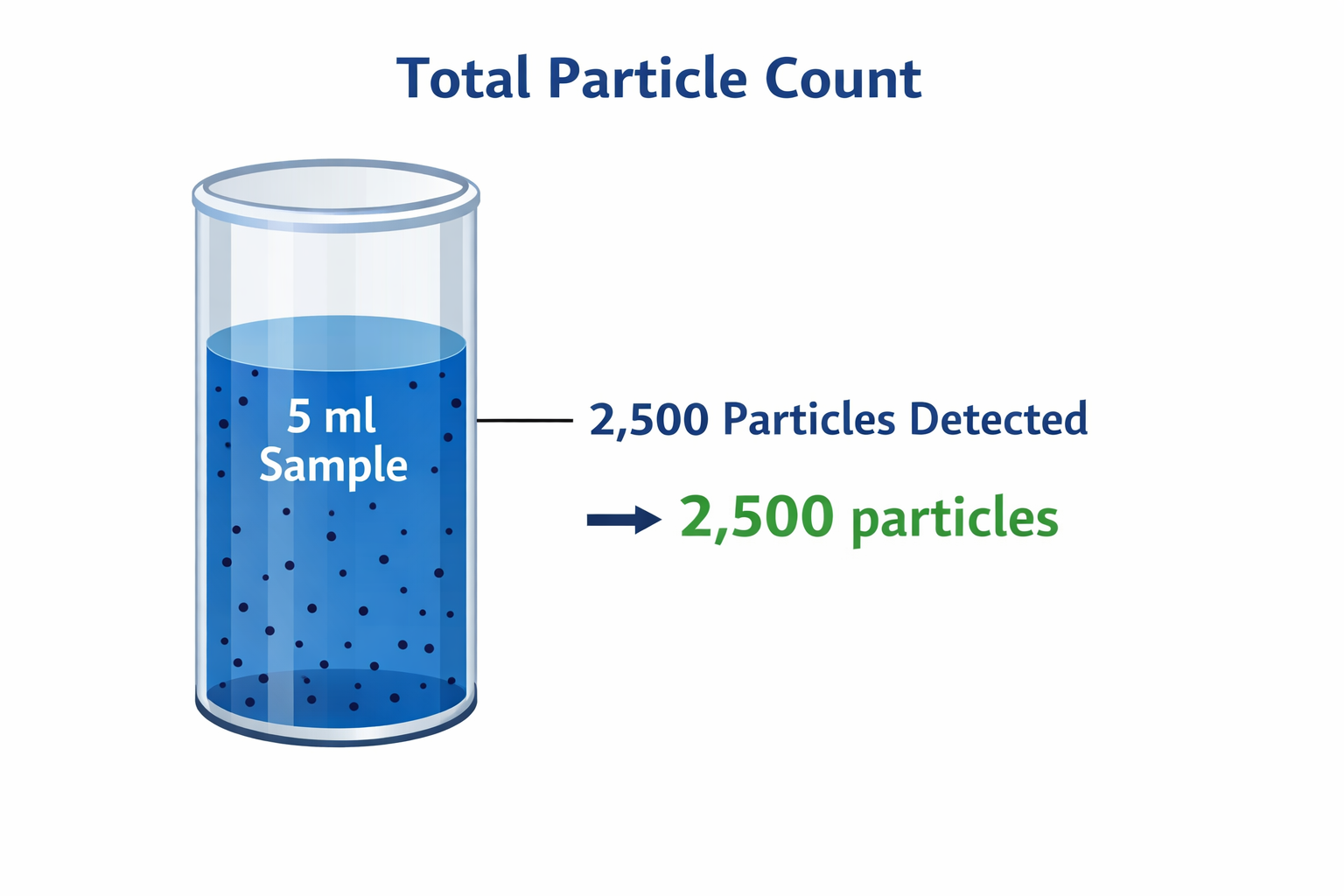
Traditional particle counting methods provide particle numbers — but they do not provide particle identity.
This is the problem Raptor 1788 was created to address.


Why USP <1788.3> was Introduced
Subvisible particle testing has long relied on Light Obscuration as the standard method defined in USP <787> and <788>. While effective for many applications, Light Obscuration primarily reports particle counts, concentration, and size distributions, without providing confirmation of particle identity or structure.
USP <1788.3> recognizes the reality of modern therapeutics: the best practice is no longer “size and count only,” but size, count, classification by shape, and images as objective evidence.
- Identify contamination sources faster
- Differentiate particle types
- Confirm whether events are real or artifact
- Support deviations, investigations, and CAPA with visual evidence
What USP Requires
- Use orthogonal analytical techniques to investigate subvisible particles
- Provide particle characterization beyond simple counting
- Support identification of particle types such as silicone oil droplets, protein aggregates, fibers, or air bubbles
- Capture particle morphology and visual information
- Help determine the source and nature of particles during investigations
Why Light Obscuration Alone Falls Short
LO reports only size and count — no visual confirmation or insight into particle origin. Critical translucent/deformable particles go unidentified:
- Protein aggregates
- Silicone oil droplets
- Fibers and fragments
- Mixed particle populations
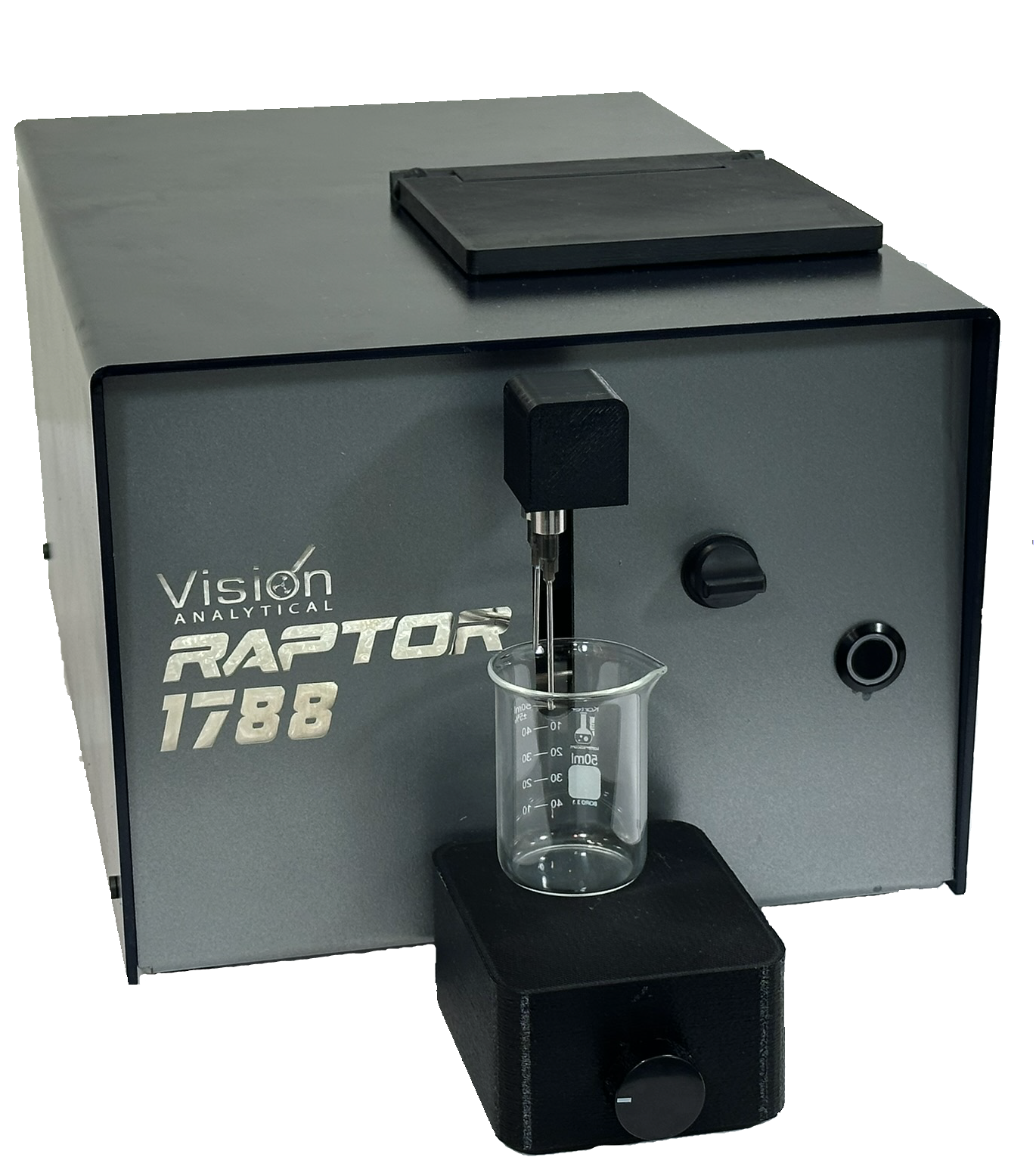
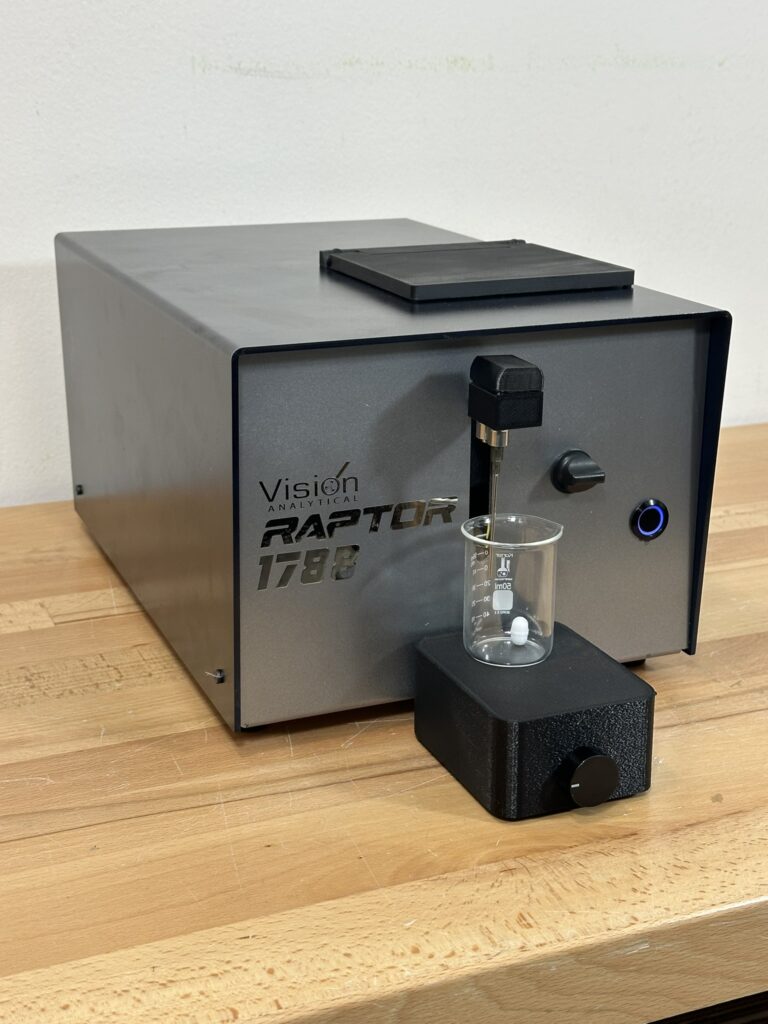
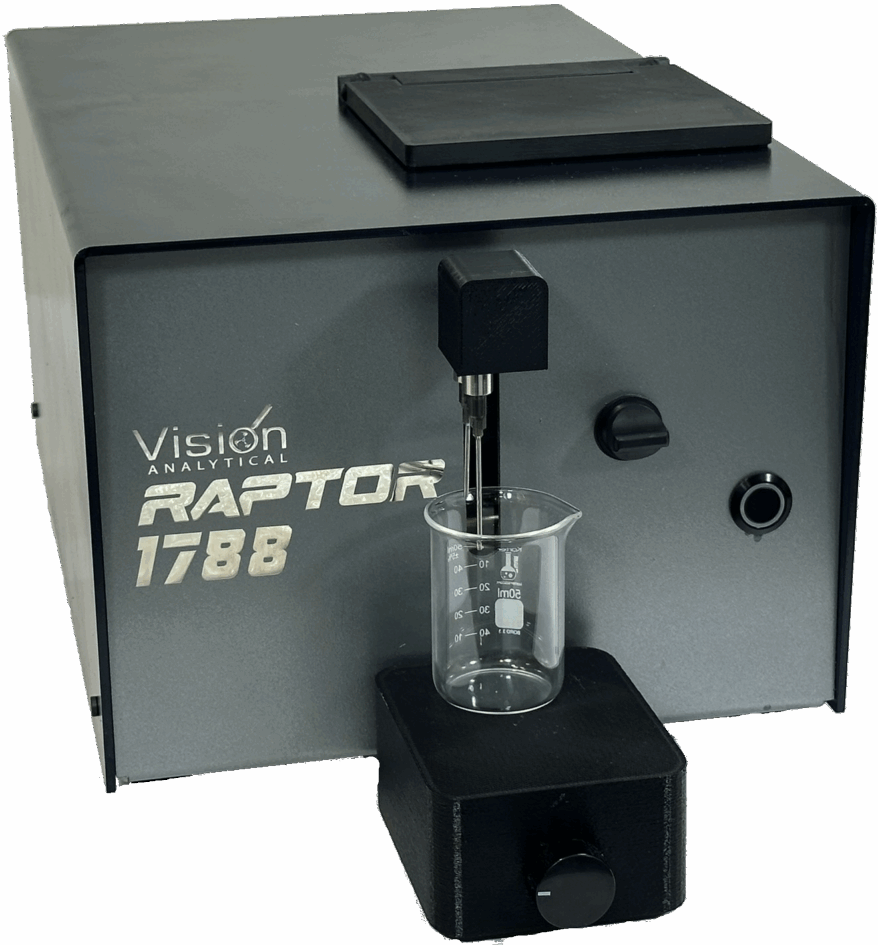
The Raptor 1788: Dynamic Imaging for Subvisible Particle Identification
The Raptor 1788 uses High-Speed Dynamic Image Analysis (DIA) to capture images of particles, adding the missing layer of compliance: particle images and morphology characterization. By combining particle imaging with AI-assisted classification, the Raptor 1788 helps laboratories distinguish between different particle types during USP <1788> investigations.
- Disposable interchangeable sample cells allow fast changeover, while a machine-learning spot removal algorithm eliminates stuck particles that could otherwise affect results
- Simple two-button operation with an integrated dashboard displaying particle thumbnails, automated classifications by type, and results reported in USP format for comparison with Light Obscuration systems
- Comprehensive particle statistics including total particle count, particle concentration, and concentration by particle type
- Flow rates up to 40 mL/min help maintain particles in suspension, reducing settling, flotation, or droplet coalescence that could affect results. Similar to proven LO suspension.
- Flexible sample introduction – analyze suspensions from beakers, prefilled syringes, IV bags, or directly from process lines
Example Particle Identification Using Dynamic Image Analysis
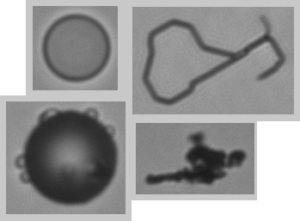
- Silicone droplets come in various sizes
- Debris can be easily classified and identified
- Fibers can be from debris, or in this case, microbial growth
Understanding Particle Populations
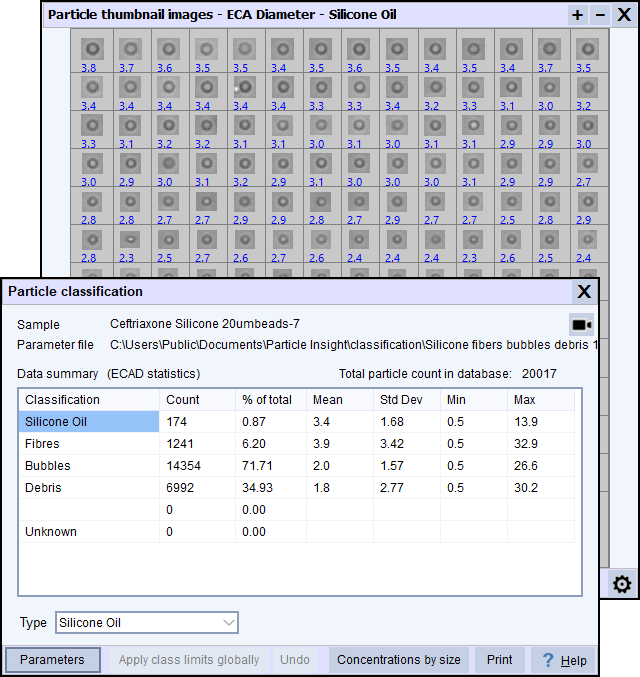
- AI-assisted classification shows particle classes with count, % of total and concentration of any one class
- Particle classes from 1µ to 100µ. Larger sample cartridges available
- Also USP equivalent reporting to compare wtih LO systems
- Disposable interchangeable sample cartridges
- Machine-learning spot detection and removal
- High flow rates up to 40 mL/min
- Automated particle classification, correlations, and USP reporting
Core Values
Key Benefits
Silicone Oil Droplet Classification
Silicone oil droplets from syringe lubrication can appear as spherical particles in subvisible particle testing. Dynamic image analysis helps visually distinguish silicone droplets from other particle types during USP investigations.
High Flow Rates Maitain Particle Suspension
Low flow rates can allow particles to settle, float, or silicone droplets to coalesce, potentially altering the observed particle population. Flow rates up to 40 mL/min help maintain particles in suspension, providing a more accurate representation of the sample.
Disposable Interchangeable sample cells prevent contamination
Disposable interchangeable sample cells reduce carryover and contamination between samples. The system supports flexible sample introduction from prefilled syringes, sealed vials, IV bags, or sample cups, allowing non-destructive testing so samples can be retained after analysis.
Machine learning removes stuck particles
Particles that adhere to the flow cell can appear repeatedly in measurements and distort results. A machine-learning spot detection algorithm automatically identifies and removes stuck particles to ensure accurate particle counts and classifications.
Read More About Subvisible Particle Analysis
See how Raptor 1788 is advancing particle analysis—explore our latest articles and real-world applications