
Portable Particle Size Analyzer: The Future of On-the-Go Particle Analysis
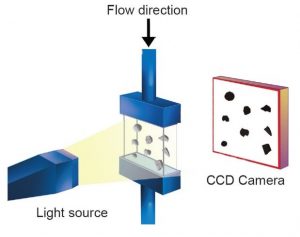
The ASTM D7596-14 (ASTM, 2018) was designed as a guide for the determination of particle concentration, particle size distribution, particle shape, and soot content for new and in service oils used for lubrication and hydraulic systems using a direct imaging integrated tester.
Dynamic Imaging: The Next Industry Standard for Contamination Monitoring
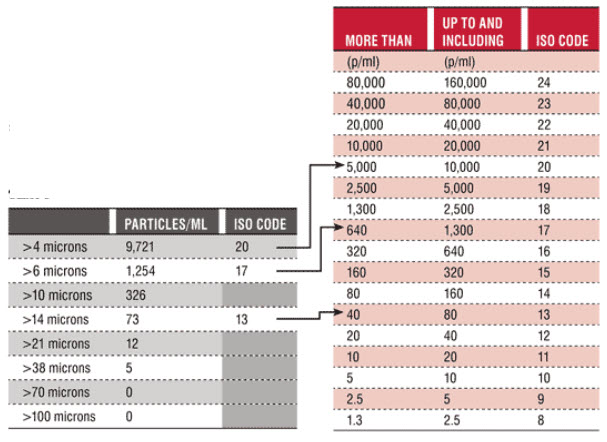
The ASTM D7596-14 (ASTM, 2018) was designed as a guide for the determination of particle concentration, particle size distribution, particle shape, and soot content for new and in service oils used for lubrication and hydraulic systems using a direct imaging integrated tester.
Hydraulic Oil Testing: Best Practices & ISO Standards for Contamination Control
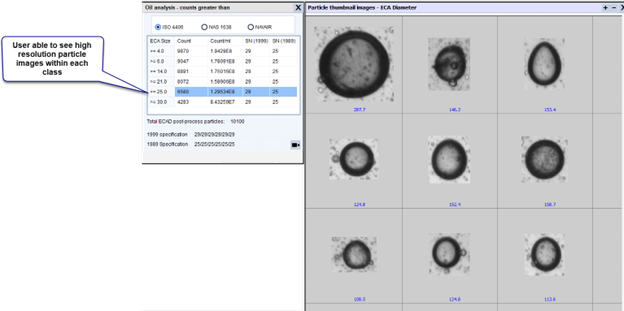
The ASTM D7596-14 (ASTM, 2018) was designed as a guide for the determination of particle concentration, particle size distribution, particle shape, and soot content for new and in service oils used for lubrication and hydraulic systems using a direct imaging integrated tester.
Revolutionizing Fluid Contamination Monitoring with Dynamic Image Analysis and ISO 21018-1
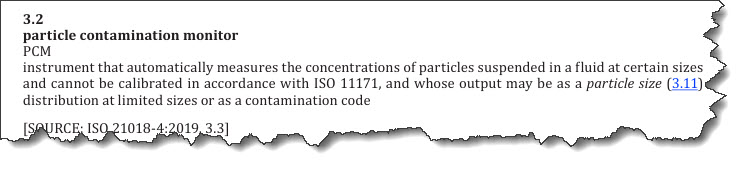
The ASTM D7596-14 (ASTM, 2018) was designed as a guide for the determination of particle concentration, particle size distribution, particle shape, and soot content for new and in service oils used for lubrication and hydraulic systems using a direct imaging integrated tester.
Water Quality Particulate Testing with a VIEW
Unlike traditional particle counting, which only provides information on particle size, dynamic image analysis provides detailed data on both particle size and shape. This allows for better identification of specific types of particles (e.g., fibrous, spherical, irregular), which can help in distinguishing between organic matter, sediment, or chemical precipitates.
Fuel and Lubrication ASTM D7596-14 Particle Test Method for Shape Classification of Oils
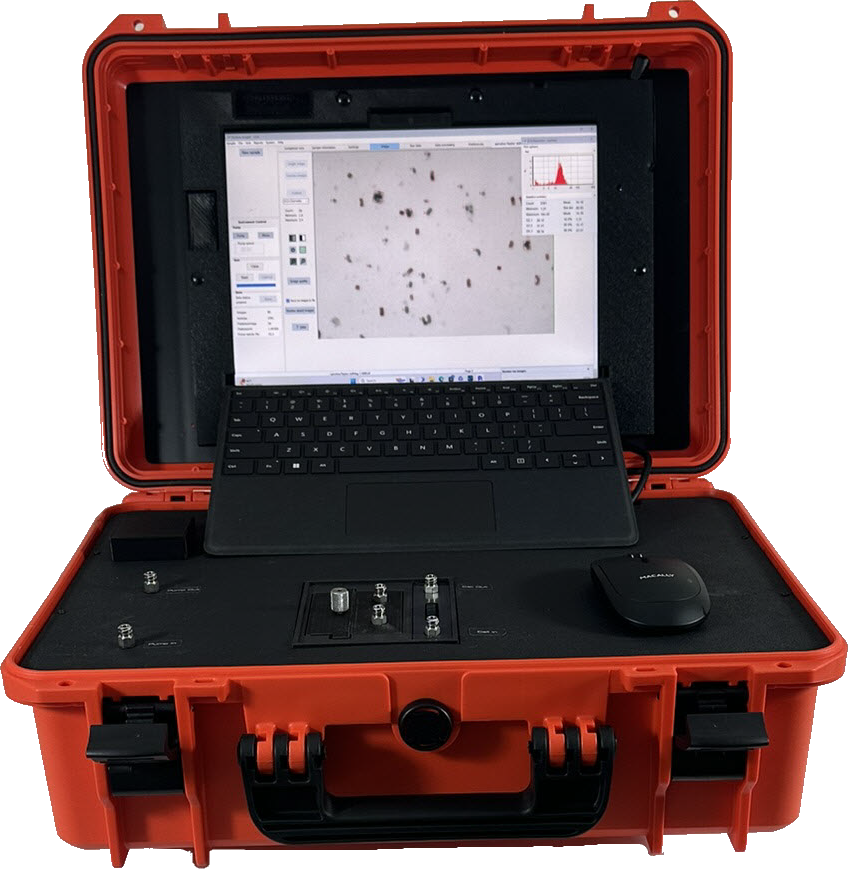
The ASTM D7596-14 (ASTM, 2018) was designed as a guide for the determination of particle concentration, particle size distribution, particle shape, and soot content for new and in service oils used for lubrication and hydraulic systems using a direct imaging integrated tester.
Particle Size and Shape of Petroleum Lost Circulation Material – #1
Lost Circulation Material (LCM) is an additive introduced to drilling fluid that can come in all different shapes and sizes. It is well understood that irregular particles have greater thickening and strength properties. As a result, analyzing size alone for selection of LCM materials would not be ideal. In this case, shape measurements such as Circularity and Smoothness as well as size, are key measurement parameters to monitor.
Fluid loss prevention and particle shape analysis
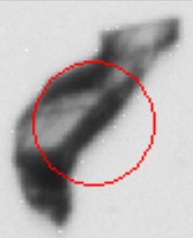
More videos on different Lost Circulation Material (LCM) which is an additive introduced to drilling fluid that can come in all different shapes and sizes. It is well understood that irregular particles have greater thickening and strength properties. As a result, analyzing size alone for selection of LCM materials would not be ideal. In this case, shape measurements such as Circularity and Smoothness as well as size, are key measurement parameters to monitor.
American Association of Drilling Engineers (AADE 24 FTCE) presentation
American Association of Drilling Engineers (AADE 24 FTCE) presentation
Key Insights into Water-Based Drilling Mud Through Image Analysis
Water-based drilling muds are a critical component in the drilling industry. They offer a balance of efficiency, cost-effectiveness, and environmental safety. The physical characteristics of these muds, such as particle size and shape, play a pivotal role in their performance. Image analysis can help decipher the properties of these muds.