

Knowledge Center

Welcome to our Knowledge Center. Here our goal is to offer the user an easy way to navigate to all of our educational content.

Hydraulic Oil Testing: Best Practices & ISO Standards for Contamination Control
The ASTM D7596-14 (ASTM, 2018) was designed as a guide for the determination of particle concentration, particle size distribution, particle shape, and soot content for new and in service oils used for lubrication and hydraulic systems using a direct imaging integrated tester.
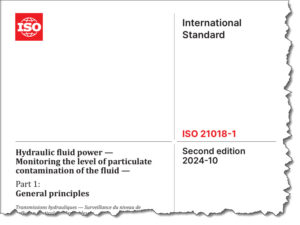
Revolutionizing Fluid Contamination Monitoring with Dynamic Image Analysis and ISO 21018-1
The ASTM D7596-14 (ASTM, 2018) was designed as a guide for the determination of particle concentration, particle size distribution, particle shape, and soot content for new and in service oils used for lubrication and hydraulic systems using a direct imaging integrated tester.

Water Quality Particulate Testing with a VIEW
Unlike traditional particle counting, which only provides information on particle size, dynamic image analysis provides detailed data on both particle size and shape. This allows for better identification of specific types of particles (e.g., fibrous, spherical, irregular), which can help in distinguishing between organic matter, sediment, or chemical precipitates.
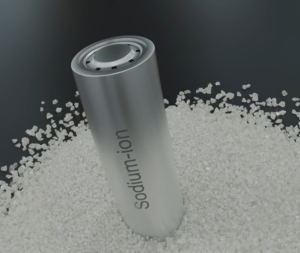
Sodium Ion Battery Powders – Shape really matters…
Particle shape plays a critical role in the performance and manufacturing of sodium-based batteries, particularly when it comes to the powders used for electrodes. The shape of the particles impacts several key factors that influence the efficiency, safety, and durability of the battery.

Fuel and Lubrication ASTM D7596-14 Particle Test Method for Shape Classification of Oils
The ASTM D7596-14 (ASTM, 2018) was designed as a guide for the determination of particle concentration, particle size distribution, particle shape, and soot content for new and in service oils used for lubrication and hydraulic systems using a direct imaging integrated tester.

Particle Size and Shape of Petroleum Lost Circulation Material – #1
Lost Circulation Material (LCM) is an additive introduced to drilling fluid that can come in all different shapes and sizes. It is well understood that irregular particles have greater thickening and strength properties. As a result, analyzing size alone for selection of LCM materials would not be ideal. In this case, shape measurements such as Circularity and Smoothness as well as size, are key measurement parameters to monitor.

Fluid loss prevention and particle shape analysis
More videos on different Lost Circulation Material (LCM) which is an additive introduced to drilling fluid that can come in all different shapes and sizes. It is well understood that irregular particles have greater thickening and strength properties. As a result, analyzing size alone for selection of LCM materials would not be ideal. In this case, shape measurements such as Circularity and Smoothness as well as size, are key measurement parameters to monitor.

American Association of Drilling Engineers (AADE 24 FTCE) presentation
American Association of Drilling Engineers (AADE 24 FTCE) presentation

Single run summary listing
Use this feature to see a concise listing of statistics for any or all measures from a single sample, in XLS format. First, the applicable size range may be narrowed if necessary. Then select the measures and statistics to include. Then click Create File to create the XLS file.
Multirun summary listing
The Multirun Summary is a way to show the major results from a series of runs in a concise format. Once the series of runs is selected, choose which measures to report on: Then select the statistics to report: Finally, click Create Worksheet to create the XLS file:
Cumulative Percents
The “percent <= and >” window reports what fraction of the sample is less than and greater than four sizes, which you enter into the window on the left side. With the distribution shown, 8.19 % of the sample’s particles, by particle count (“number”) are below 10.0 microns in size, and 91.7 % are between [...]
Comprehensive Statistics
The Comprehensive Statistics window characterizes the sample in greater detail, using commonly-accepted statistics for histogram data. The Arithmetic values come from the original data and correspond visually to what the histogram would look like on a linear size axis. Geometric stats reflect the appearance of the distribution on the log axis. Mean is the average [...]
Surface area and volume weighting
Sometimes you need to know how particles are distributed along the size axis with respect to surface area or volume. For example you might need to know how much of the sample volume is between two specific particle diameters. The Particle Insight computes surface area and volume for each particle. The calculation is done separately [...]
Irregular Model
Applications: Chemical, polymer, pharmaceutical, and natural powders; toners, gypsum, food condiments; any sample whose particles do not conform easily with any of the other shape models, or for which data on surface roughness is needed. Available measures: Feret Width Feret Width is the smallest possible spacing between parallel lines that contact but do not intersect [...]
Fiber Model
Applications: Thin fibers such as cellulose and other natural fibers, which are used as thickening agents, and in such materials as adhesives, textiles, sealers, coatings and insulation. Available measures: Fiber Width Fiber Length The Fiber model reshapes bent fibers into a straightened rectangle. Fiber Width and Fiber Length are the width and length of that [...]
Visit our YouTube Page
Particle Insight Raptor Portable Series
- Raptor – General Brochure
- Raptor – Fuel and Lubrication Edition
- Raptor – ASTM 7596-14 Compliance Document
- Raptor – Oil and Gas Edition
Hydro Insight Series
Particle Insight Sentinel Series
If you are looking for any specific document or information that you cannot find, please contact us and we will be able to answer your questions or even create any needed documentation.