
One Eye Shut – Why Particle Sizing Evaluations Should Include Particle Shape, Dynamic Image Analysis
In pharmaceutical manufacturing, particle shape and size play a critical role in determining powder flowability, a property that directly impacts drug formulation, blending, and tablet compression. Traditional particle size analysis alone often provides an incomplete picture — ignoring the influence of shape on how powders behave under real processing conditions.
This post explores the importance of particle shape analysis in pharmaceutical applications, highlighting industry data that demonstrates the relationship between morphology and flow performance. By comparing results from complementary analytical techniques, we show how dynamic image analysis (DIA) offers a more complete understanding of powder behavior than particle sizing alone.
For pharmaceutical scientists and engineers, integrating particle shape characterization into quality control and research ensures improved consistency, safety, and regulatory compliance.

Introduction
Particle size analysis has a broad range of applications encompassing virtually all industries. Numerous automated techniques exist for measuring particle size distribution, and nearly all report particle size in units of equivalent spherical diameter, which assumes the particles are all spherical or round in shape. This is necessary because of the ambiguity of describing the diameter of an irregularly shaped particle, and of constraints inherent in the instrument detection system.
Of the available sizing instruments, laser diffraction (LD) particle size analyzers are used extensively across many industries and applications. The LD method is a very robust, efficient, and reproducible method, but requires special consideration when particles deviate from spherical to a more irregular morphology. A needle-shaped particle of 90 µm may present itself as having an equivalent sphere diameter of only a few microns in laser diffraction, based on its angular presentation to the LD detectors. Because of this phenomenon, as a particle deviates from spherical, the irregularity in circularity it presents can have an acute influence on the obtained Particle Size Distribution (PSD) of the population. This may widen that distribution, even though the actual size of the particles remains uniform and consistent. As an example, due to random orientation, a rod-like particle can present itself in laser diffraction as a rectangle, a circle representing the diameter of the rod, or any possible combination of those orientations relative to the laser detection system.
How Particle Shape Affects Powder Flow
It’s well understood that Particle Size Distribution (PSD) is one of the most significant influences on the flow behavior of powders. Most operators have included robust particle-sizing analytical tools to assess and control PSD to desired levels and ensure uninhibited flow character. But particle shape is also a key factor in determining and controlling powder flow and performance. Particles segregate by differences in mobility based on size, but shape has been shown to significantly influence that mobility too. Shape controls the orientation and magnitude of the interparticle forces between particles — particles of similar size but differing shape can have very different flow behavior, and particles with irregular surfaces can cause substantial mechanical interlocking and resistance to flow.
Surface irregularities or roughness can also influence flow behavior in fluidized bed reactors used for catalytic chemical reactions; reaction kinetics are compromised as shape deviates from spherical toward a flattened form.[1] Irregularly shaped particles can minimize interparticle mass transfer rates, and catalyst deactivation rates increase with irregular or complex-shaped particles showing increased carbon formation rates.[2]

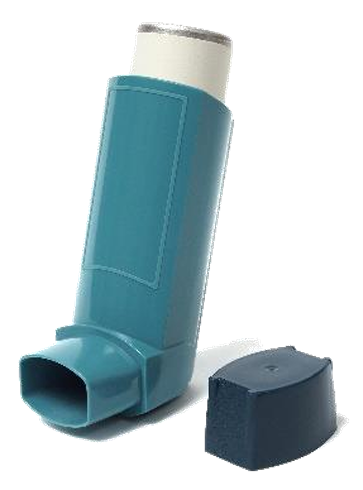
In inhalation drug therapies, careful consideration of shape is recommended to complement particle size data. Shape has a direct impact on aerosolization, deposition, and flowability. Pollen-shaped particles have been shown to exhibit improved flowability, greater emitted dose, and higher fine particle fractions compared to other shapes of the same or similar PSD.[3]
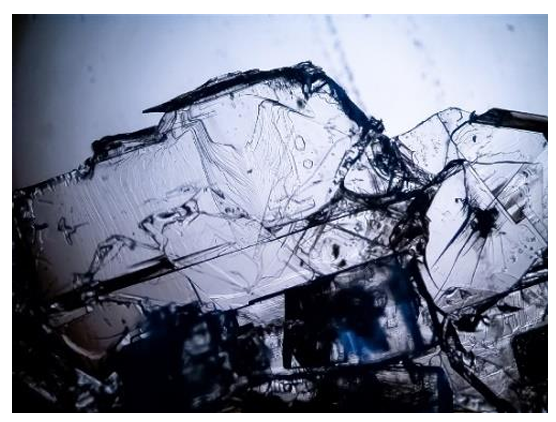
In pharmaceuticals, the control of shape and crystal form is vital, as they affect downstream processing operations such as filtration, drying, and milling. Shape also determines the physical and chemical properties of the API, such as dissolution rate and solubility.[5]

Crystal form and particle shape influence a pharmaceutical API’s dissolution rate and solubility — the same underlying relationship that shapes downstream filtration, drying, and milling behavior.
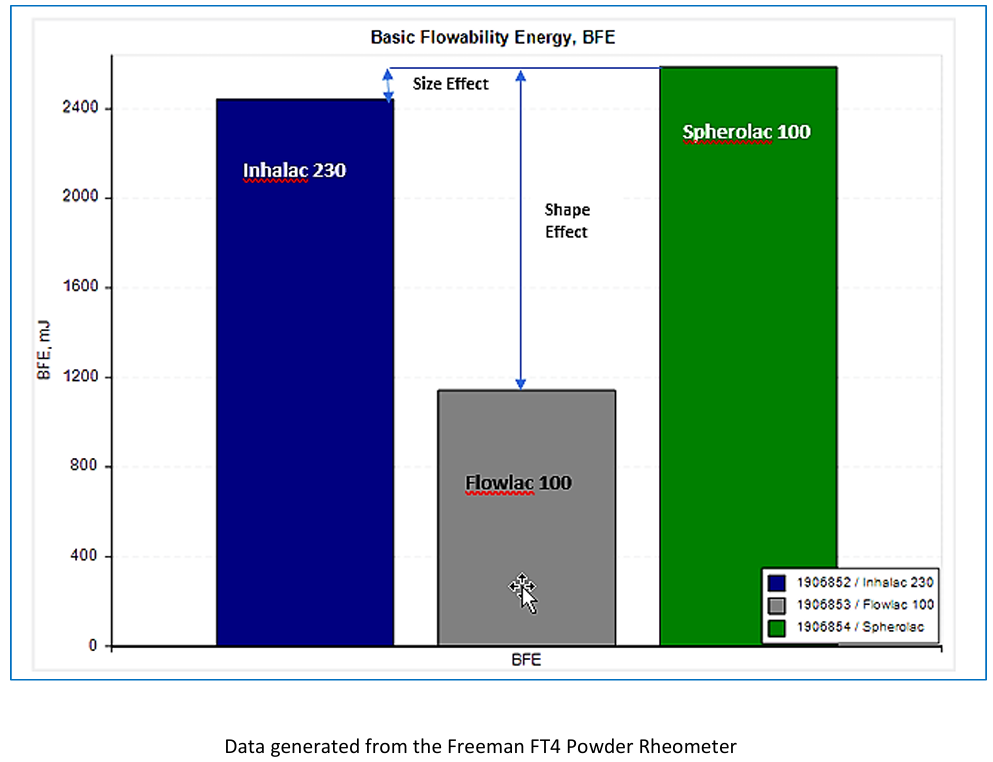
To illustrate the influence of shape in pharmaceutical excipients, we analyzed three commercial samples of lactose (FlowLac 100, SpheroLac 100, and Inhalac 230). Of these, FlowLac 100 and SpheroLac 100 have very similar Particle Size Distributions but differ in actual shape, whereas Inhalac 230 and SpheroLac 100 have similar shapes but differ in PSD. In this case, the difference in Basic Flowability Energy is most influenced by the difference in shape morphology between the samples tested, rather than by differences in Particle Size Distribution.
Integrating Dynamic Image Analysis Into a Laser Diffraction Workflow
It’s now possible to integrate a dynamic imaging shape analyzer directly into the workflow fluid path of a particle sizing laser diffraction instrument. The Particle Insight series instruments (Hydro Insight ) can be used as a complementary method by connecting directly to the sample vessel or in-line fluidic path of the laser diffraction system. This ensures the same aliquot being tested on the laser diffraction system is the same sample tested for shape. It requires no changes or re-validation of the current method or process — it integrates easily within the fluid path of the existing size-only instrument. As the sample is analyzed, the Hydro Insight system taps into the sizing instrument in-line and performs real-time shape analysis without jeopardizing the sample or the integrity of the size results.
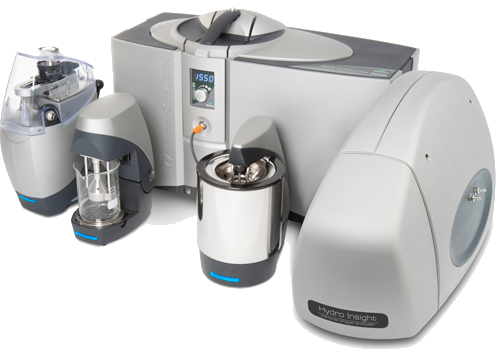
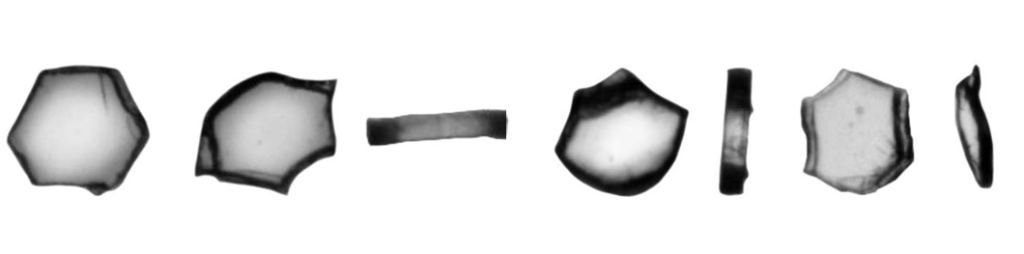
Dynamic Image Analysis uses high-speed, high-resolution optics to capture each individual particle as it streams continuously past a detection zone of known and controlled volume. This permits random orientation, so each particle’s physical shape and size can be measured and represented as a grayscale image and a binary fingerprint used for data deconvolution. Because the Hydro Insight using Dynamic Image Anlalysis is a number-based technique, it reports both Number and Volume weighted statistics. It also reports 32+ shape measure statistics of each particle as well as thumbnail images that offer objective evidence of the particles analyzed. It’s also possible to determine particle concentration, thanks to the high-speed particle capture rate and the known volume of the detection area.
Why Dynamic Imaging is a great compliment to Laser Diffraction
Laser diffraction remains one of the most trusted, efficient, and widely used methods for particle sizing — fast, reproducible, and well suited to a huge range of applications. Its underlying architecture does create a handful of scenarios where pairing it with an imaging-based measurement sharpens the picture:
- Small surface irregularities may not be captured by laser diffraction scattering pattern — shape data helps clarify what’s actually there.
- Non-spherical particles can present differently to the light source depending on their orientation in the measurement cell; an imaging method captures that orientation directly rather than relying on inference.
- The algorithms that convert scattering patterns into a size distribution rely on a set of underlying assumptions, and dynamic imaging provides an independent, orthogonal measurement to validate the results against.
- Laser diffraction reports size as an equivalent spherical diameter, which works well for many materials — for particles with more irregular shapes, adding direct shape and size imaging rounds out the result.
Together, laser diffraction’s speed and reproducibility paired with dynamic imaging’s direct shape and orientation data give a more complete view of particle morphology than either method alone — which is exactly why adding a system like Hydro Insight to your existing Mastersizer, rather than replacing it, gets you the best of both.
Conclusion: Working With Both Eyes Open
Incorporating dynamic image analysis directly within the sizing workflow lets a user capture important shape information while also gaining an orthogonal technique to validate the sizing data. With this addition to particle morphology determinations in the lab, users can now work with both eyes open when characterizing the size and shape of their particles.
For detailed information on dynamic image analysis, contact us at www.ParticleShape.com.
Related Reading
References
- Cho, Jaehun & Sohn, Hong Yong. (2016). Effects of particle shape and size distribution on the overall fluid-solid reaction rates of particle assemblages. The Canadian Journal of Chemical Engineering, 94. 10.1002/cjce.22533.
- Karthik G. M. and Vivek V. Buwa. Effect of Particle Shape on Catalyst Deactivation Using Particle Resolved CFD Simulations, ISCRE25, May 2018.
- Meer Saiful Hassan, Raymond Wai Man Lau. Effect of Particle Shape on Dry Particle Inhalation: Study of Flowability, Aerosolization, and Deposition Properties. AAPS PharmSciTech, 2009 Dec; 10(4): 1252. Published online 2009 Oct 29. doi: 10.1208/s12249-009-9313-x
- Hlosta, Jakub & Žurovec, David & Jezerská, Lucie & Zegzulka, Jiří & Necas, Jan. (2016). Effect of Particle Shape and Size on the Compressibility and Bulk Properties of Powder. Powder Metallurgy, June 2016.
- Jie Chen, Bipul Sarma, James M. B. Evans, and Allan S. Myerson. Pharmaceutical Crystallization. Crystal Growth & Design 2011, 11 (4), 887-895. DOI: 10.1021/cg101556s