

Knowledge Center

Welcome to our Knowledge Center. Here our goal is to offer the user an easy way to navigate to all of our educational content.
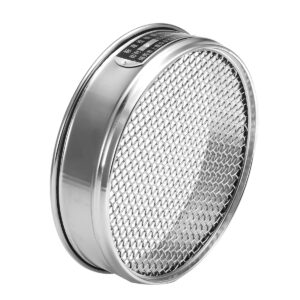
Sieve Correlation Using Dynamic Image Analysis
Sieve correlation has been a well-established method in particle sizing for many years, but the development of automated dynamic image analysis is beginning to revolutionize the process. In this blog post, we will discuss how automated dynamic image analysis is becoming a complementary method to sieve correlation and how it provides more accurate and detailed results.

Is Dynamic Image Analysis Essential for Proper Fiber Particle Analysis?
Dynamic image analysis (DIA) is a digital method of particle characterization that enables a researcher to identify the shape, size, and number of particles in a sample. Due to its high accuracy and reproducibility, DIA is a widely used image analysis method across most industries to support quality control, compliance, and research applications.
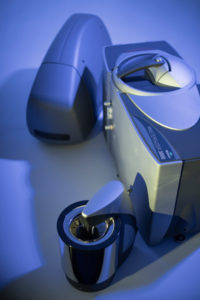
Shape Matters: The Importance of Image Analysis for Measurement of Rods and Spherical Particles
The behavior of raw materials can typically be predicted by properly studying a sample and identifying physical characteristics such as particle size. Features most commonly analyzed include distribution, size, and shape. Particle size measurement is a crucial process in various industries, as understanding specific particles and their properties can enhance productivity, reduce waste and ensure product quality.
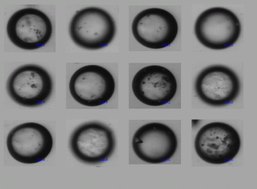
How & Why You Should Use Dynamic Imaging to Identify Agglomerates
Particle size is a crucial property to measure when dealing with particulate raw materials. It underlies key manufacturing parameters like flowability, packing, and wetting–each of which can have a demonstrable impact on the end quality of a part or product.
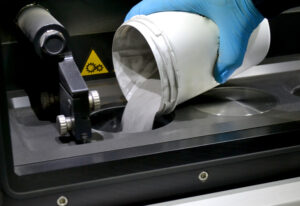
How Dynamic Image Analysis Helps Screen Metal Powders for 3D Printing
Creating parts using metal powders requires exceptional high-quality raw materials. Many analytical tools are used to pre-screen metal powders to ensure proper powder flowability, prevent clogging, and ensure adequate particle deposition to guarantee well-made parts.
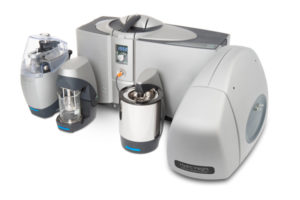
How Particle Shape Analysis Compliments Size Measurements
Particle size reduction is a routine method of increasing surface area and making downstream processing more efficient. It is well documented that particle size distribution (PSD) affects powder flowability. However, studies have demonstrated the limitations of particle size analysis – particularly in applications with irregular particles. Ignoring particle shape can lead to significant under-estimation of the mean particle size which leads to errors in PSD results.
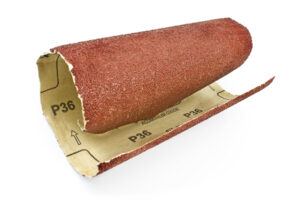
How Particle Shape Analysis Complements Abrasives
Particle size is a critical factor in qualifying abrasive powders. Larger particles typically produce an aggressive cutting action with fast material removal rates, albeit with a poor surface finish. Smaller particles, by contrast, offer a smoother finish with significantly reduced rates of removal.
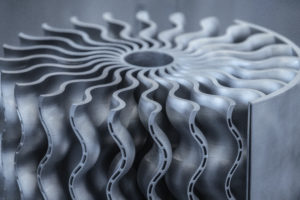
Using Dynamic Image Analysis & Laser Diffraction for 3D Printing Metal Powder Identification
Material identification is a crucial part of the additive manufacturing process, particularly when dealing with metal powder feedstocks. Although metal powder 3D printing is increasingly common, there are various quality assurance and control (QA/QC) challenges that must be considered.

Single run summary listing
Use this feature to see a concise listing of statistics for any or all measures from a single sample, in XLS format. First, the applicable size range may be narrowed if necessary. Then select the measures and statistics to include. Then click Create File to create the XLS file.
Multirun summary listing
The Multirun Summary is a way to show the major results from a series of runs in a concise format. Once the series of runs is selected, choose which measures to report on: Then select the statistics to report: Finally, click Create Worksheet to create the XLS file:
Cumulative Percents
The “percent <= and >” window reports what fraction of the sample is less than and greater than four sizes, which you enter into the window on the left side. With the distribution shown, 8.19 % of the sample’s particles, by particle count (“number”) are below 10.0 microns in size, and 91.7 % are between [...]
Comprehensive Statistics
The Comprehensive Statistics window characterizes the sample in greater detail, using commonly-accepted statistics for histogram data. The Arithmetic values come from the original data and correspond visually to what the histogram would look like on a linear size axis. Geometric stats reflect the appearance of the distribution on the log axis. Mean is the average [...]
Surface area and volume weighting
Sometimes you need to know how particles are distributed along the size axis with respect to surface area or volume. For example you might need to know how much of the sample volume is between two specific particle diameters. The Particle Insight computes surface area and volume for each particle. The calculation is done separately [...]
Irregular Model
Applications: Chemical, polymer, pharmaceutical, and natural powders; toners, gypsum, food condiments; any sample whose particles do not conform easily with any of the other shape models, or for which data on surface roughness is needed. Available measures: Feret Width Feret Width is the smallest possible spacing between parallel lines that contact but do not intersect [...]
Fiber Model
Applications: Thin fibers such as cellulose and other natural fibers, which are used as thickening agents, and in such materials as adhesives, textiles, sealers, coatings and insulation. Available measures: Fiber Width Fiber Length The Fiber model reshapes bent fibers into a straightened rectangle. Fiber Width and Fiber Length are the width and length of that [...]
Visit our YouTube Page
Particle Insight Raptor Portable Series
- Raptor – General Brochure
- Raptor – Fuel and Lubrication Edition
- Raptor – ASTM 7596-14 Compliance Document
- Raptor – Oil and Gas Edition
Hydro Insight Series
Particle Insight Sentinel Series
If you are looking for any specific document or information that you cannot find, please contact us and we will be able to answer your questions or even create any needed documentation.