
When it comes to High Performance Liquid Chromatography (HPLC), most people focus on particle size. But ignoring particle shape can seriously hurt your column’s packing quality, flow consistency, and chromatographic performance.
In this article, we explain why particle shape matters for HPLC columns, how Dynamic Image Analysis solves shape problems, and what you can do to improve your column results.
Overview
High Performance Liquid Chromatography, or HPLC, is widely used in analytical chemistry to separate, identify, and quantify compounds in a solution. The performance of an HPLC column depends heavily on the quality and consistency of the packing material inside the column.
Most traditional HPLC packing materials are silica- or alumina-based particles with average diameters of approximately 2 to 30 microns. These materials are often characterized using particle sizing techniques that assume the particles are uniformly spherical. In practice, however, packing materials may contain fines, rod-like particles, and other irregularly shaped particles.
As particle size decreases, the impact of fines and non-spherical particles becomes more significant. Even when the average particle size is within specification, variation in particle shape can affect packing consistency, flow behavior, backpressure, plate count, and overall chromatographic performance. For this reason, manufacturers need a practical way to quantify particle shape, not just particle size.
Dynamic Image Analysis provides a direct method for measuring and visualizing the shape of individual particles, making it useful for incoming quality control of HPLC packing materials.
Read more about particle properties in our post:
Basics of Particle Characterization
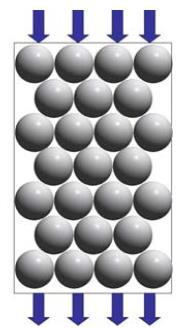
A column packed with uniform spherical beads is easier. to manufacture and yields consistent and uniform results.
The Challenge
A column packed with uniform, spherical particles is easier to manufacture and is more likely to produce consistent performance. Uniform particles tend to pack predictably, support consistent flow paths, and reduce variability from column to column.
When irregular particles, fines, or rod-like particles are present, packing becomes less predictable. These particles can alter the internal structure of the packed bed, creating non-uniform flow paths and increasing the likelihood of inconsistent backpressure or reduced column efficiency.
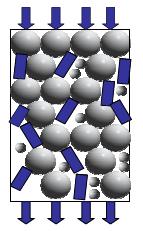
In some cases, incoming lots of packing material may meet particle size specifications but still perform poorly because of shape differences. Without shape information, these differences may go undetected until the material reaches column manufacturing or final performance testing.
A practical incoming quality control method should therefore answer three important questions:
- What percentage of the material is non-spherical or rod-like?
- Are there multiple shape populations in the sample?
- Does the lot pass or fail the manufacturer’s established shape criteria?
Dynamic Image Analysis Method
Dynamic Image Analysis measures particles as they pass through an imaging zone. Instead of assuming that all particles are spherical, the instrument captures images of individual particles and calculates size and shape parameters from the actual particle silhouettes.
For this application, the packing material sample was suspended in water and analyzed using a Particle Insight / Pi Sentinel PRO dynamic image analysis system. Proper sampling was performed to obtain a representative subsample of the incoming material. During the analysis, approximately 10,000 particle images were captured in just over one minute.
The key measurements used in this application were:
| Measure | Typical Range of Acceptance |
|---|---|
| Feret Width | 3–100 microns |
| Feret Length | 3–100 microns |
| Feret Aspect Ratio | 1.0–30.0 |
Feret Aspect Ratio was used as the primary shape indicator. A particle with a Feret Aspect Ratio near 1.0 is more equant, while higher values indicate increasingly elongated or rod-like particles.
Results
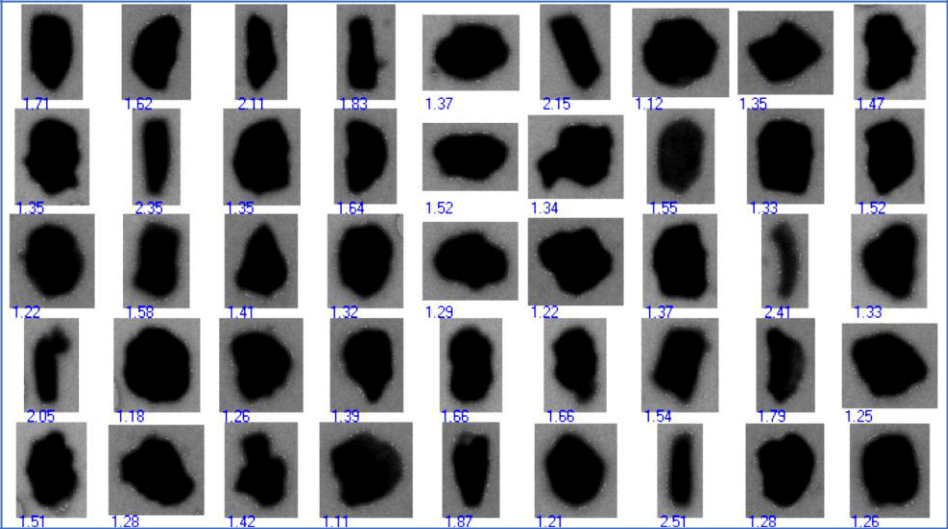
After analysis, the particle thumbnail images showed that the sample contained two distinct shape populations. One population consisted of rod-like particles. The second population had an aspect ratio closer to unity, but the particles were still not truly round.
This distinction is important because a conventional sizing technique that assumes spherical particles would not clearly differentiate between these shape populations. Dynamic Image Analysis allowed the user to see the particles, measure their shape, and quantify the percentage of particles that could negatively affect column packing.
For this application, particles with a Feret Aspect Ratio greater than 1.9 were classified as rod-like. This threshold was developed by comparing lots that produced acceptable column performance with lots that exhibited packing or performance problems.
Using this criterion, the sample contained 1,591 rod-like particles out of the analyzed distribution. These particles represented 15.90% of the total sample population.
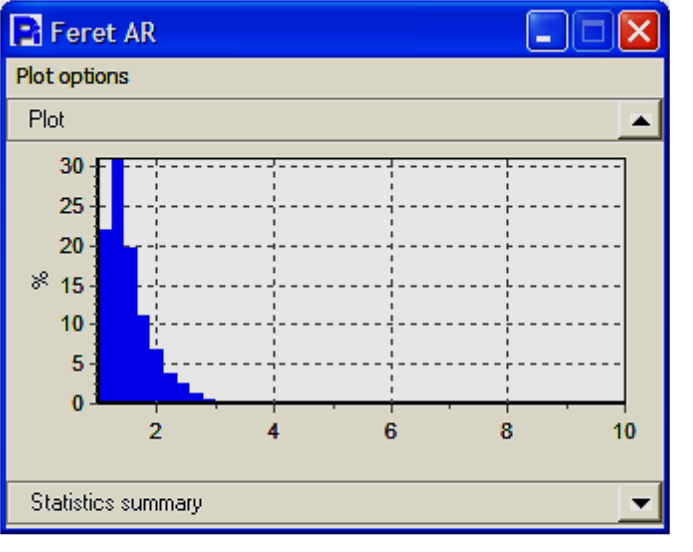
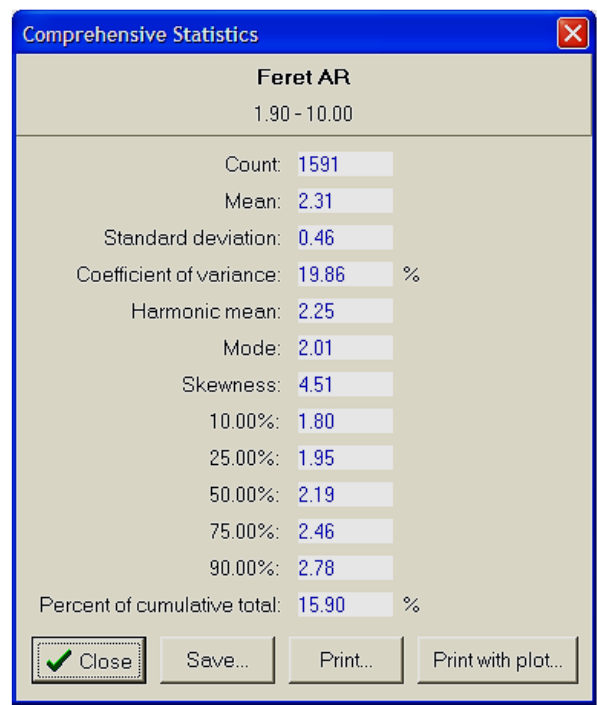
The established incoming quality control limit for this material was no more than 10% rod-like particles. Because the tested lot contained 15.90% rod-like particles, it failed the acceptance criterion.
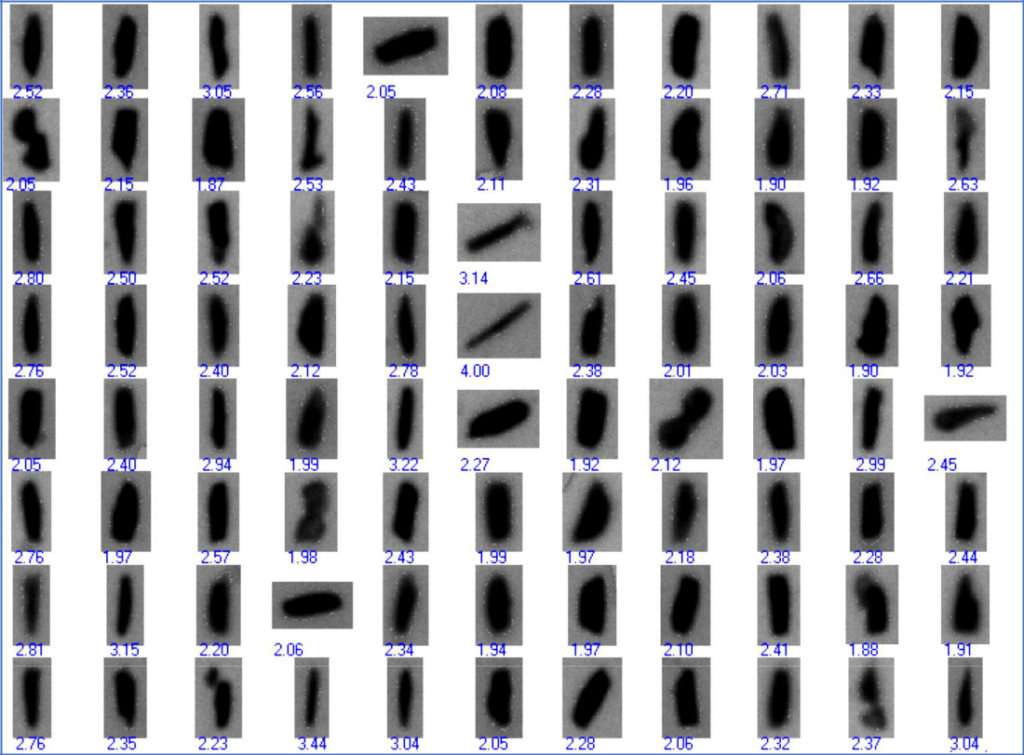
Thumbnail images of particles classified as rod-like based on a Feret Aspect Ratio greater than 1.9.
Process Control Value
Once the manufacturer established the relationship between particle shape and column performance, the Dynamic Image Analysis method became a practical process control tool.
Rather than relying only on average particle size, incoming quality control personnel could use the Feret Aspect Ratio distribution to determine whether a lot contained an acceptable or excessive percentage of rod-like particles. The Percentile Statistics feature allowed the user to create a simple pass/fail criterion based on the percentage of particles above the selected aspect ratio threshold.
In this case:
| Quality Control Criterion | Result |
| Rod-like particle definition | Feret Aspect Ratio > 1.9 |
| Maximum allowable rod-like particles | 10% |
| Measured rod-like particles | 15.90% |
| Lot disposition | Fail |
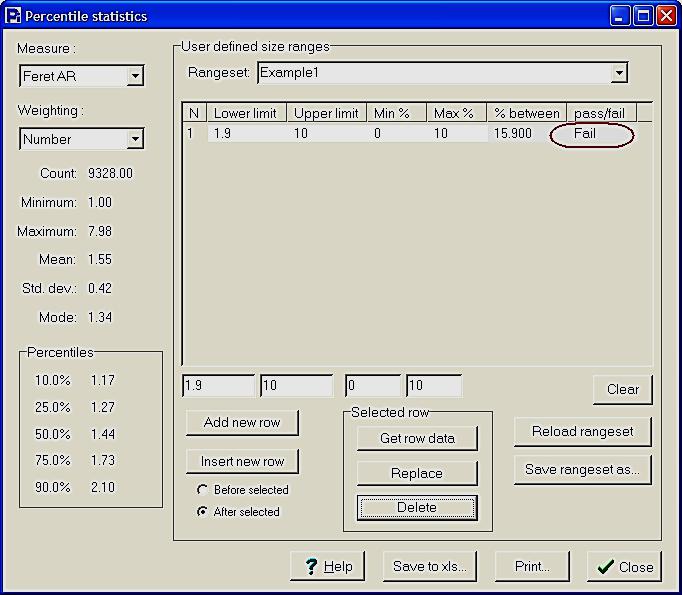
Percentile Statistics can be used to establish pass/fail criteria for incoming quality control. In this example, the lot fails because 15.90% of particles exceed the 1.9 Feret Aspect Ratio threshold.
This approach gives manufacturers a faster and more objective way to screen incoming packing materials before they reach column production.
Why Shape Matters for HPLC Column Performance
Particle size remains an important parameter for HPLC packing materials, but size alone does not fully describe how a material will behave during packing or use.
Irregular and elongated particles can influence:
- Column packing efficiency
- Filling-stage backpressure
- Bed uniformity
- Flow path consistency
- Plate count
- Column-to-column reproducibility
- Manufacturing cost and downtime
A lot containing excessive rod-like or irregular particles may require additional manufacturing expertise, may be more difficult to pack consistently, or may produce columns with variable performance.
By measuring particle shape before column manufacturing, producers can identify problematic lots earlier in the process. This reduces the risk of production delays, failed columns, and inconsistent end-user results.
Conclusion
Dynamic Image Analysis provides a practical method for identifying and quantifying shape variation in HPLC packing materials. By capturing images of individual particles and calculating shape parameters such as Feret Aspect Ratio, the technique allows manufacturers to distinguish spherical, irregular, and rod-like particles within the same sample.
In this application, the method identified an excessive percentage of rod-like particles in an incoming alumina packing material. Particles with a Feret Aspect Ratio greater than 1.9 accounted for 15.90% of the total distribution, exceeding the established 10% limit. As a result, the lot failed the incoming quality control criterion.
The manufacturer remains responsible for determining the acceptable percentage of non-spherical or rod-like particles for each application. Once those criteria are established, Particle Insight dynamic image analysis systems can be used as pass/fail inspection tools for incoming quality control.
Identifying shape-related inconsistencies before column manufacturing can reduce costs, improve production efficiency, and help ensure consistent HPLC column quality and performance.
Want to know more about how shape influences overall particle behavior?
Why Particle Shape Is Important